Leave for the Dunes
Meet your guide and travel towards the desert. Choose a traditional camel safari or a more energetic jeep ride across the dune landscape.

Leave the bright city behind and watch the Thar Desert sky open above you. Happy Adventure Camp combines a peaceful night setting, warm hospitality and thoughtfully planned desert experiences near Sam Sand Dunes.
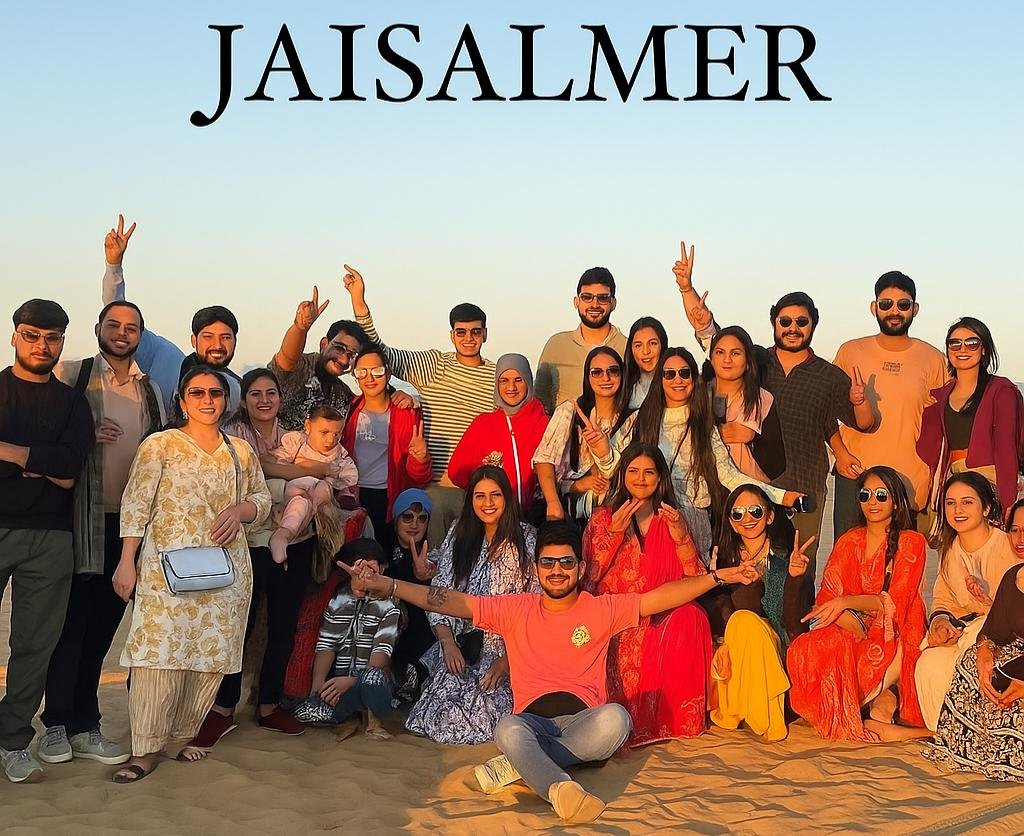
Jaisalmer is celebrated for its golden fort, carved havelis and sweeping dunes, yet one of its most affecting experiences begins after sunset. As the last colour fades from the sand, the horizon grows quieter and the stars gradually become visible. Stargazing in Jaisalmer offers a rare opportunity to pause, look upward and experience the scale of the Thar Desert without the distractions of a busy city.
At Happy Adventure Camp, stargazing can become the gentle closing chapter of a complete desert evening. Guests may begin with a camel ride or jeep safari, watch the sunset, enjoy Rajasthani folk music and dinner, and then spend time beneath the open sky. The experience does not need to feel technical. You can simply sit comfortably, allow your eyes to adjust and observe how many stars appear once artificial light is reduced.
Clear visibility always depends on weather, clouds, moonlight and atmospheric conditions, so no responsible operator can promise a particular celestial view. What the desert consistently offers is space: broad horizons, quieter surroundings and a strong sense of distance from everyday routines. Even when the moon is bright, its glow over the dunes creates a beautiful atmosphere of its own.
A good stargazing evening is unhurried. The exact schedule varies with season and sunset time, but the following flow shows how the experience may unfold.
Meet your guide and travel towards the desert. Choose a traditional camel safari or a more energetic jeep ride across the dune landscape.
Pause at a suitable viewpoint as the sun drops. Warm gold, amber and soft pink tones move across the sand, offering time for photographs and quiet observation.
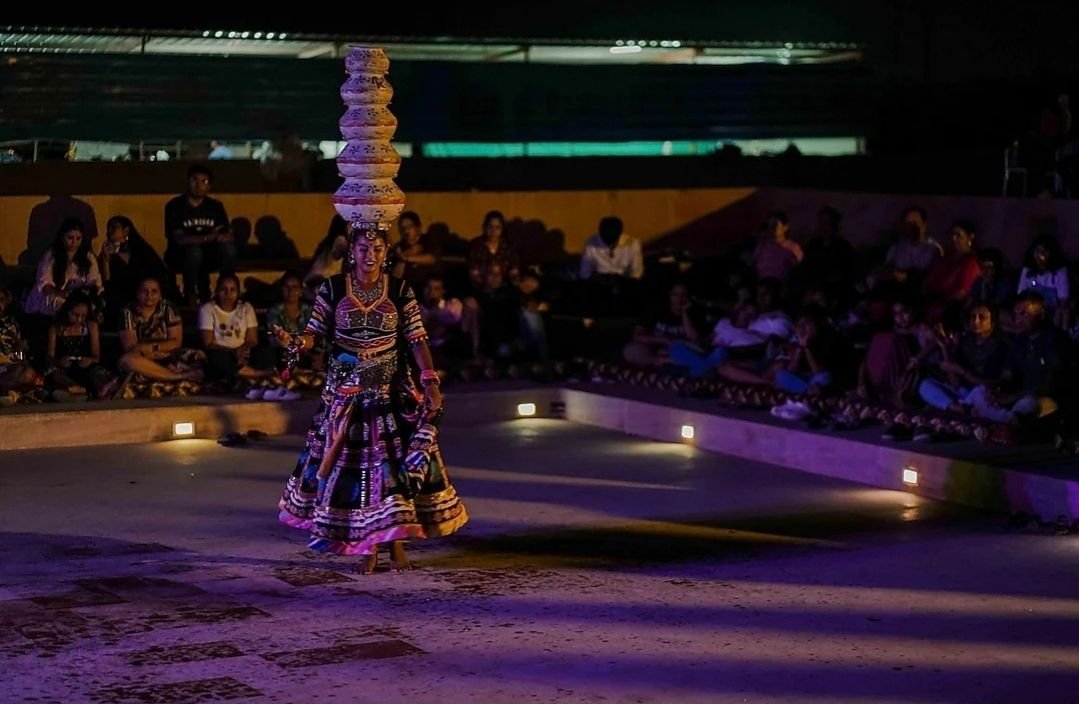
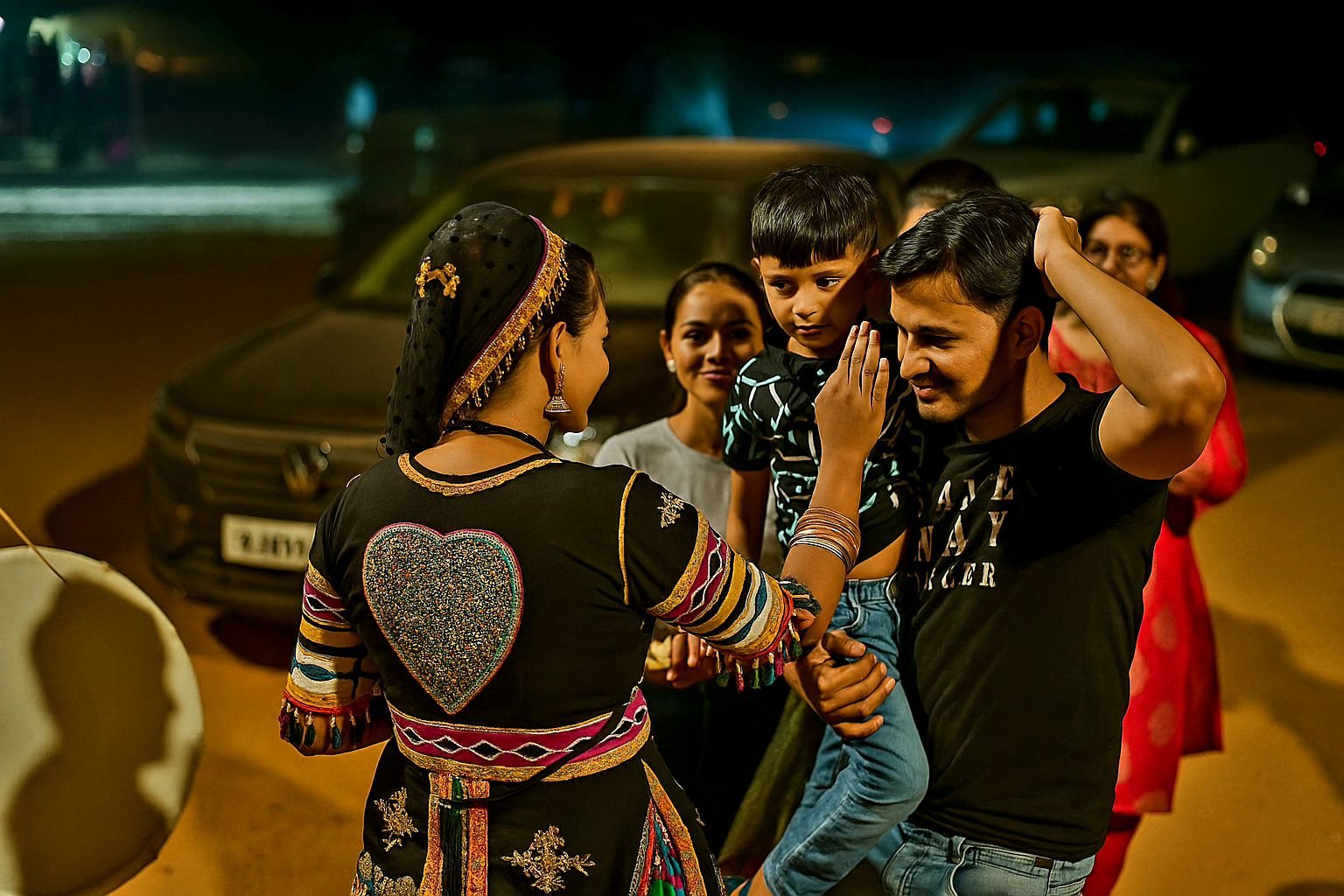
Return for folk music, dance and a relaxed meal. Guests seeking a special celebration may also enquire about a private dinner on the dunes.
Move to a lower-light area, let your eyes adapt and observe the night sky. Your host can help create a comfortable setting according to the selected package.
The stargazing experience is shaped by the entire journey: open roads, dune textures, fading sunlight and camp life after dark.
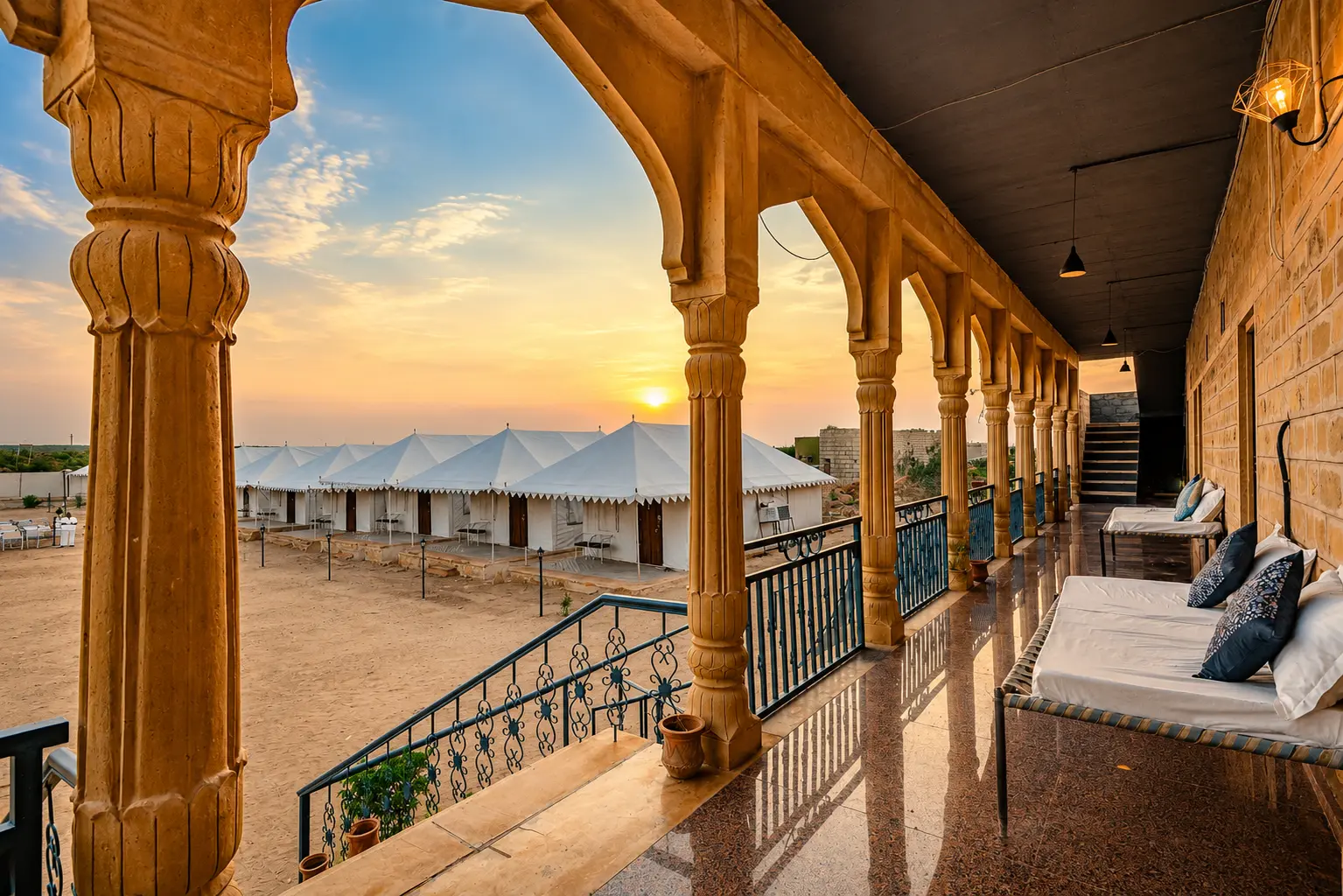
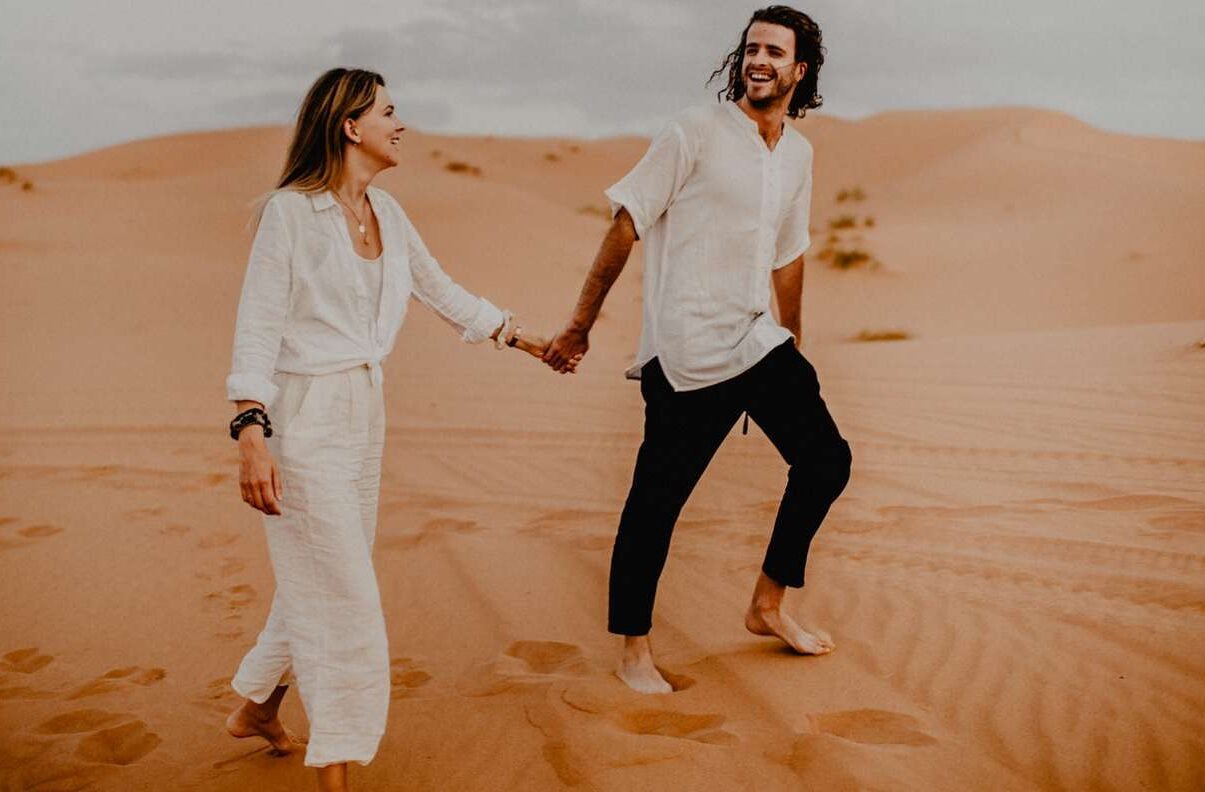
The desert has an naturally expansive character. Low vegetation and broad horizons allow visitors to see a large portion of the sky, while locations away from dense urban development may have less distracting light than central Jaisalmer. The sense of openness is as important as the number of visible stars. Without tall buildings framing the view, the sky seems closer and the movement of the night becomes easier to notice.
Visibility varies across dates and locations. Nearby camp lighting, passing vehicles, dust, humidity, clouds and the phase of the moon can all affect the result. For deeper darkness, guests may prefer a night closer to the new moon. For illuminated dunes and moonlit portraits, a brighter moon can be equally attractive. Decide what kind of atmosphere you want rather than assuming there is only one “best” night.
Depending on the season, time and conditions, visitors may identify familiar constellations, bright planets, satellites or occasional meteors. The visible sky changes throughout the year, and the same location can feel very different from one month to another. A stargazing session at a desert camp is primarily an outdoor travel experience rather than an observatory visit. Specialist telescopes or expert astronomy interpretation should only be expected when they are specifically included in your confirmed package.
Children often enjoy finding simple patterns or watching for moving points of light. Couples may prefer quiet seating and photographs, while photographers might focus on silhouettes, long exposures and the relationship between stars and dunes. Tell the team what interests you so they can recommend a suitable plan.
Human eyes need time to adapt after looking at bright lamps or screens. Lower your phone brightness, avoid using a flash and spend around twenty minutes in softer light before judging visibility. A red light, if available, is less disruptive than a bright white torch. Guests should still follow their guide’s safety instructions and use adequate lighting while walking on uneven ground.
Stargazing works best when the group maintains a calm atmosphere. Loud music, continuous vehicle headlights and bright decorative lighting reduce the sense of stillness. If a quiet experience matters to you, say so during booking. Private arrangements may provide more control than a shared camp programme, subject to availability and local conditions.
A stable tripod, manual camera controls and a wide-angle lens are useful for photographing stars. Keep batteries charged because cooler temperatures can shorten battery life. Focus carefully, experiment with exposure rather than relying on one setting, and include a dune ridge, tent or person as foreground context. Avoid walking through another photographer’s frame with a torch.
Phone cameras can also capture appealing night scenes when they include a dedicated night mode and remain steady. The most valuable photograph may still be the simplest one: the glow of camp light against the dark, a silhouette on a ridge or friends sitting together beneath the sky. Do not let constant photography prevent you from experiencing the moment directly.
The Thar is a living environment, not an empty backdrop. Carry waste back, avoid leaving plastic or food on the sand and do not disturb animals. Follow established routes and the guidance of local hosts. Keep sound controlled in quieter areas, especially late at night. Responsible behaviour protects the landscape and helps nearby communities continue to welcome travellers.
Dress respectfully and prepare for temperature changes. Do not wander away alone after dark; dune contours can make orientation difficult. Families should keep children nearby, and all guests should inform the guide about medical or mobility considerations. A well-managed experience balances romance with sensible safety.
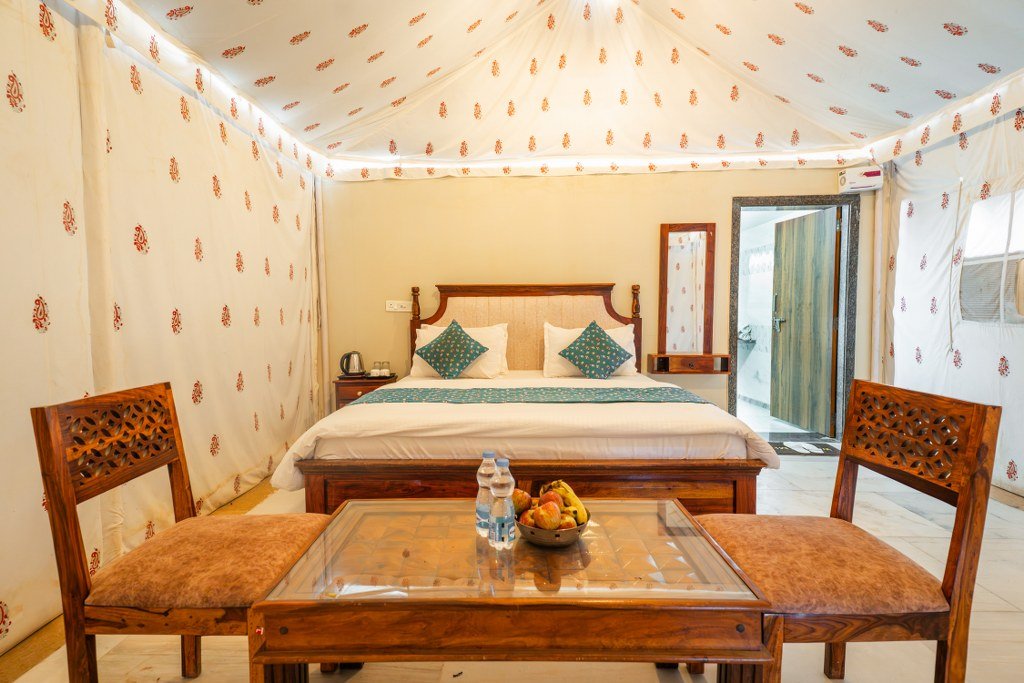
Travelling back to the city immediately after a late session can feel rushed. Staying at a luxury desert camp in Jaisalmer allows the evening to end naturally. After observing the sky, return to your tent, rest and wake to the soft light of a desert morning. The 1 night 2 days desert camp package is a practical option for travellers who want sunset, safari, culture, dinner, stargazing and breakfast in one coordinated plan.
If you have more time, pair the desert night with Jaisalmer Fort, Patwon Ki Haveli, Gadisar Lake and Bada Bagh. Our 2 nights 3 days Jaisalmer itinerary balances the city’s architecture with the open landscape of Sam. Guests arriving from Gujarat can also review the Jaisalmer camp package from Ahmedabad.
Combine sunset, a private meal where available and time beneath the stars. Mention anniversaries or special occasions early so suitable arrangements can be discussed.
Keep the schedule comfortable for children and older family members. A shorter observation session after the cultural programme can be both educational and enjoyable.
Plan around moon phase, foreground options and weather. Ask about lower-light areas and carry the equipment required for stable long-exposure images.
Add a jeep safari or quad bike activity before sunset, then slow the pace with dinner and a relaxed group stargazing session.
A coordinated camp programme offers local assistance and a structured way to experience the desert rather than navigating isolated areas alone after dark.
Share arrival times, transport and meal preferences beforehand. A clear group schedule leaves enough time for both entertainment and quiet observation.
Cooler months are comfortable for night activities, but visibility depends on clouds, dust, moonlight and local lighting. A date near the new moon may offer a darker sky, while a brighter moon creates attractive dune scenery.
Do not assume specialist equipment is included. Standard camp stargazing may be a guided or hosted open-sky experience. Ask specifically about telescopes, binoculars or an astronomy expert before confirming.
Yes. A common plan includes a sunset camel or jeep safari, cultural programme, dinner and time beneath the sky. Exact timings and inclusions should be confirmed for your chosen package.
It can be suitable for families when organised with a camp team. Keep children close, follow the guide, carry warm clothing and share mobility or health needs in advance.
Wear comfortable footwear and carry layers. Winter nights can feel cold after warm afternoons. In other seasons, breathable clothing remains useful, but always check the expected weather.
Yes, subject to conditions. A tripod and manual controls help. Reduce screen brightness, avoid disturbing other guests with flash and bring charged batteries.
No. Visibility cannot be guaranteed because it changes with season, timing, moon phase, weather, dust and light pollution. Ask about likely conditions for your date without treating any forecast as certain.
Send your travel date, number of guests, preferred activities, accommodation and transport needs through the official contact page. Request final inclusions, payment terms and cancellation conditions in writing.
Plan a stargazing evening or combine it with safari, culture, dinner and an overnight stay at Happy Adventure Camp.